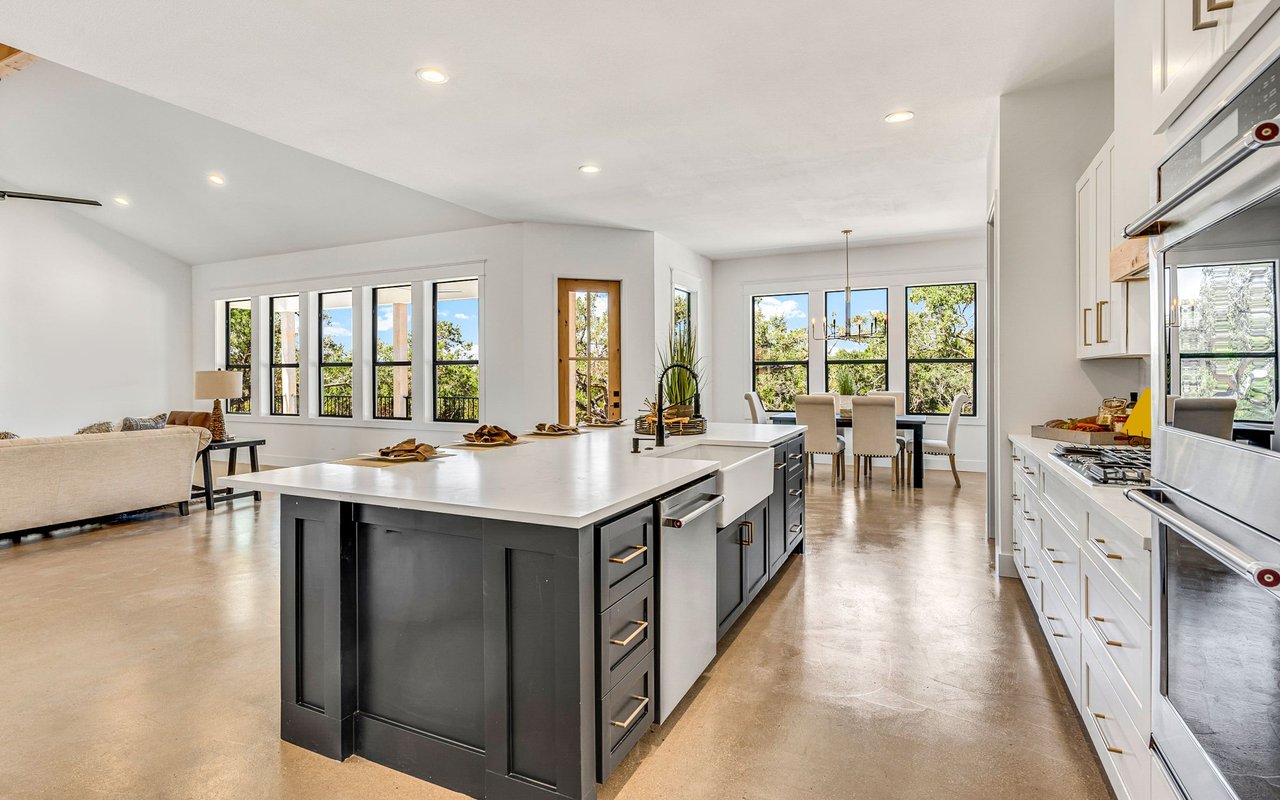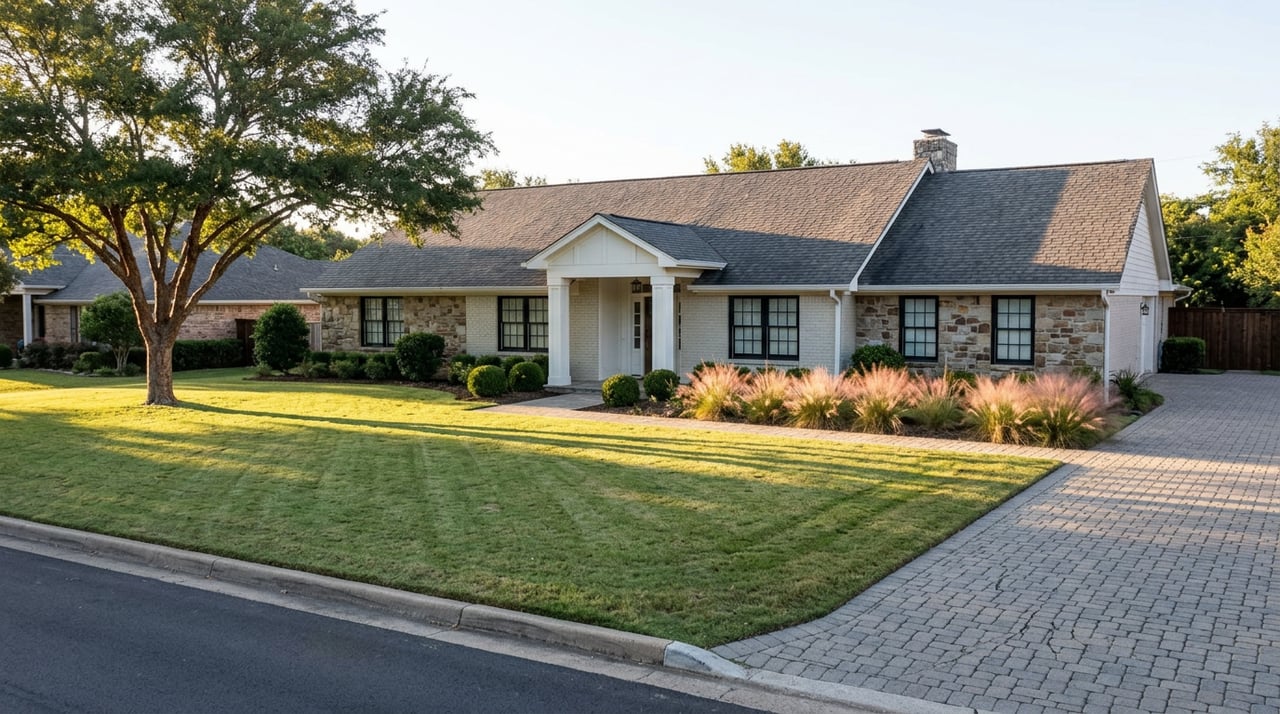
Drive three miles in Haslet and you can watch the market split in two. On one street, a stone monument sign welcomes you into a community with a resort-style pool and a mowed common area, and a small placard near the entrance references the district that funded the roads and drainage. A few turns away, a metal gate opens onto 4.3 acres with a shop building already standing on it, no HOA, no architectural committee, room for horses. Both are Haslet. Both show up in the same MLS search. They are not, in any way that matters to a buyer's monthly payment, the same market.
That split is the story behind Haslet's numbers this year, and it is the reason two buyers can look at the same city and walk away with completely different math.
The Notice You Sign Before You See the Real Number
North Texas growth corridors, Haslet included, build roads, water lines, and drainage ahead of rooftops through special districts, typically a Municipal Utility District or a Public Improvement District. A MUD is a governmental entity that can levy its own property tax to repay the bonds that financed that infrastructure. A PID works differently: it's an assessment tied to specific improvements that benefit the properties inside its boundary, and in Haslet, that assessment is commonly structured as a fixed dollar amount per lot rather than a percentage tax rate.
Either way, the cost is real and it is layered on top of your county, city, and school taxes. Across DFW growth corridors, that added cost commonly runs $300 to $400 a month on a $450,000 home, sometimes more, and it is not always the number a builder's finance sheet highlights first. Texas law requires sellers, including builders, to hand buyers a formal Notice to Purchaser before the contract is signed if the property sits inside a MUD. If that notice is missing or incomplete, a buyer typically has a window to terminate the contract after receiving it properly. Few buyers ever use that leverage, mostly because few know it exists until they're already three months past closing and staring at an escrow adjustment that doesn't match what they budgeted for.
With the average 30-year fixed mortgage rate sitting at 6.66% as of July 30, 2026, according to Freddie Mac's weekly survey, a few hundred extra dollars a month isn't a rounding error. It's the difference between a payment that fits and one that doesn't.
Two Medians, One City
Here's where Haslet gets genuinely interesting for anyone comparing listings. Recent citywide data puts Haslet's overall median home value near $390,000, down roughly 3% year over year, with homes typically going pending in about 35 days. Meanwhile, active new-construction listings in Haslet carry a median closer to $744,000, according to Redfin's current inventory.
That's not two years of appreciation. It's two different products living under one zip code. The $390,000 figure reflects the older housing stock and remaining non-restricted parcels that make up Haslet's original footprint. The $744,000 figure reflects the wave of master-planned communities that have gone in over the past several years, most of them on half-acre-plus homesites, most of them inside a PID, and most of them priced for a move-up buyer rather than an entry-level one. Builders keep pushing north into this corridor in part because Dallas-Fort Worth employment kept climbing through early summer, up 1.3% year over year in June 2026 according to the Bureau of Labor Statistics, which is the kind of job growth that supports higher price points on new product even while resale values in the same city cool slightly.
If you're only comparing one median to another, you're comparing apples to a completely different orchard.
What Haslet's New Communities Actually Charge
Even within the new-construction side of Haslet, the cost structure varies more than the matching brick and stone facades suggest. A sample of active communities:
| Community | Builder(s) | Typical Homesite | HOA (Annual) | Notable |
|---|---|---|---|---|
| LeTara | First Texas Homes | Half-acre | $850 | 1.86% tax rate; homes priced from the $610,000s |
| Sweetgrass | Multiple builder sections | Varies by section | $2,000 to $2,200 | 294-acre master plan; homes from the high $400s to mid $900s |
| NorthGlen | Our Country Homes | Custom-build lots | Not published | Off I-35 and Highway 287; now selling Phase III |
| Madero | Trophy Signature Homes | Varies | Not published | Under 30 minutes to downtown Fort Worth |
LeTara and Sweetgrass sit close enough to each other geographically that a buyer cross-shopping both might assume the carrying costs are roughly interchangeable. They aren't. Sweetgrass's HOA runs more than double LeTara's, which tracks with a larger amenity footprint spread across 294 acres, but it means two homes at similar price points can carry a $1,200-plus annual gap in dues alone before anyone talks about the district assessment layered underneath either one. Northwest ISD serves both communities, along with NorthGlen and most of the newer product in this part of Haslet, so school district isn't the variable driving the cost difference. The amenity package and the district structure are.
Both communities sit within easy reach of Alliance Town Center and Presidio Junction for daily shopping and dining, and Haslet Community Park and Eagle Mountain Lake remain the closest outdoor options regardless of which side of the HOA line you land on. Location isn't what separates these numbers. Structure is.
The Acreage That's Still Escaping the PID Line
The other half of Haslet, the side with no monument sign, is thinner than it used to be but hasn't disappeared. Current listings include a 4.85-acre tract outside city limits with no HOA and no restrictions, complete with an existing 30-by-50 shop building with two 14-foot overhead doors. A separate 4.3-acre property advertises the same freedom, explicitly marketed for country living with room for horses.
Even here, though, the "no restrictions" label deserves a second look. One recent 1-acre custom homesite in Haslet came with no HOA and no required build timeline, a genuinely rare combination in this market, but the lot was sold with an exclusive builder partnership attached, meaning the buyer's choice of who builds the home was already decided before they signed. That's not a PID assessment showing up later. It's a different kind of constraint, traded for the acreage and the freedom from monthly dues.
For a buyer weighing custom homes or land purchases in Haslet, this is the real comparison: a master-planned lot with a known, published HOA and a district assessment layered on top, against a rural parcel with no dues and no district, but sometimes a builder relationship you don't get to choose. Neither is automatically the better deal. They're just priced differently, and the price shows up in different places.
Running the Real Monthly Number
Take LeTara as a concrete example, since its numbers are actually published. A home there in the $610,000s carries an 1.86% tax rate and $850 a year in HOA dues, which works out to roughly $71 a month before any district assessment is added. Layer in a PID or MUD cost anywhere near the $300 to $400 monthly range common across DFW growth corridors, and the all-in carrying cost on that home moves several hundred dollars past what a bare principal-and-interest quote suggests.
Compare that to a no-HOA acreage tract with no district attached at all. The base tax rate still applies, but there's no HOA line and no assessment line to add. The tradeoff is no pool, no walking trail with fitness stations, and often a longer drive to daily errands.
Neither structure is wrong for every buyer. But treating a $744,000 new-construction listing and a $390,000 resale listing as points on the same curve, without asking which cost structure sits underneath each one, is how a buyer ends up with a monthly payment that doesn't match what they planned for on the drive home from the model home.
A Few Direct Questions
Does every new-construction community in Haslet sit inside a PID? Not every one, but many of the larger master-planned communities in this corridor do, since the districts are typically formed to fund the infrastructure those communities need before the first house goes up. The only way to know for a specific address is to check the Notice to Purchaser disclosure and the closing documents for that lot.
Can a PID assessment be paid off early? Often, yes. Many PIDs allow a lump-sum prepayment of the remaining assessment at closing or shortly after, and some buyers negotiate with the builder to cover that payoff instead of taking a standard rate buydown or closing cost credit. It's worth asking specifically, since builders don't always offer it unprompted.
Is no-HOA acreage in Haslet going to keep shrinking? Given how much of the current new-construction pipeline is master-planned and district-funded, the remaining unrestricted parcels are a smaller share of the market than they were a few years ago. That doesn't mean they're gone, but it does mean a buyer who wants that option should expect fewer choices and more competition for the ones that remain.
Let's Connect
Comparing a Haslet new-construction listing to a Haslet acreage listing isn't really a comparison of two homes. It's a comparison of two cost structures, two sets of restrictions, and two very different long-term commitments. If you're trying to figure out which side of that line actually fits your budget and your plans, Rhonda Jenkins has spent more than two decades walking North-Central Texas buyers through exactly this kind of decision, from master-planned HOA communities to open acreage and everything in between. Let's Connect and go through the real numbers together before you fall for a model home finance sheet.